


Remote Construction Management in Bahia, Brazil: How We Build Your Home from Anywhere (2026)
The biggest fear I hear from international clients isn’t the cost. It isn’t even the legal complexity of buying land in Brazil as a foreigner. The thing that holds most people back from building in Itacaré or Ilhéus is this: “How do I know what’s actually happening on the site when I’m 6,000 miles away?”
I’ve been managing high-end residential projects on the southern coast of Bahia for over a decade. The most complex — an 800m² home for an American client — was managed entirely remotely, from design approval to key handover. That project showed me exactly where the gaps are in traditional construction management, and exactly what a functional remote oversight system needs to contain.
This article is a technical breakdown of how it works in practice.
Why Most Remote Builds in Brazil Fail
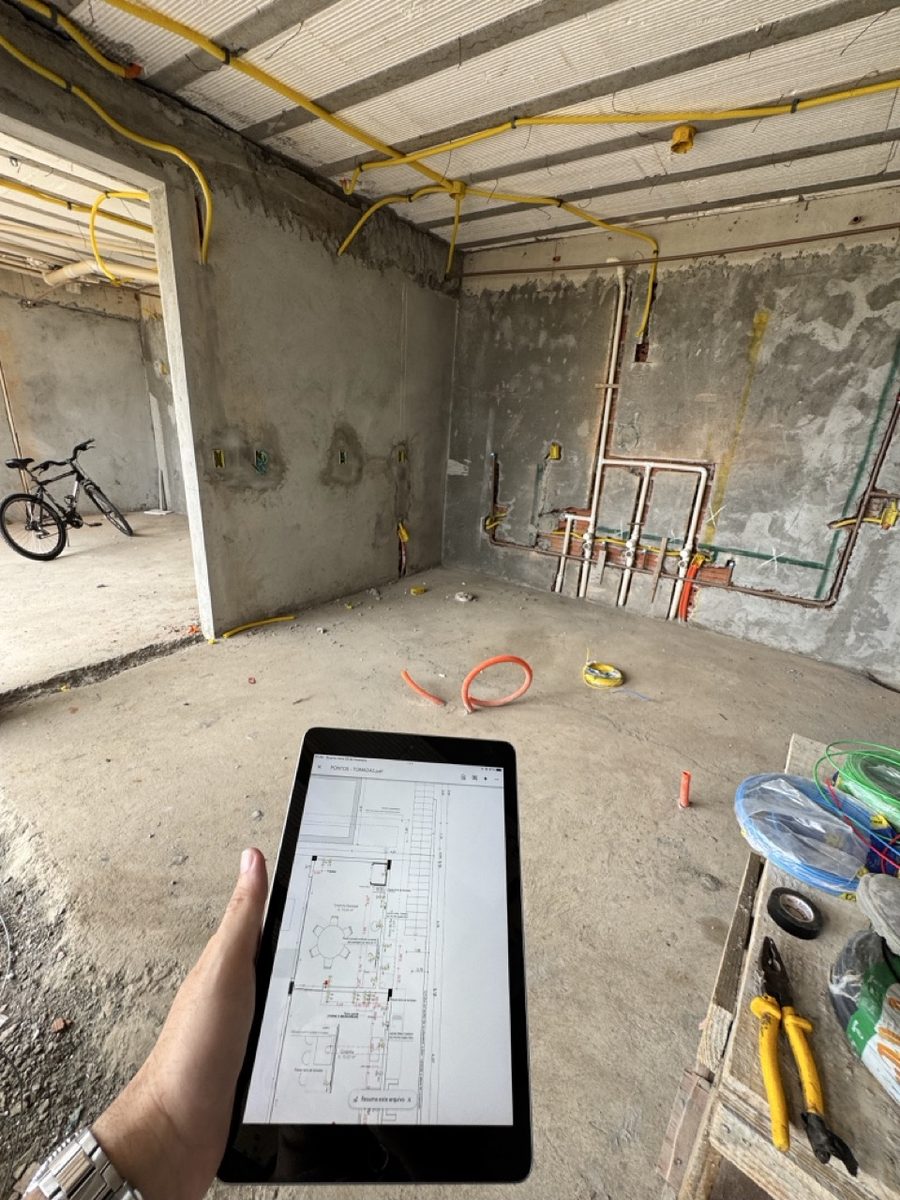
The construction industry in Brazil is relationship-driven. Most decisions — material substitutions, timeline adjustments, subcontractor choices — happen informally on-site, in conversations that never get documented. When the client is local, they can show up unannounced and course-correct. When the client is in Florida or London, those informal decisions stack up until they become expensive problems.
The failure pattern is predictable: good intentions at the start, a few months of WhatsApp photos, then silence — then a site visit that reveals the floor plan was modified because the foreman “thought it would be better,” the tile is wrong, and the budget has drifted by 30%.
That’s not a Brazil problem. That’s a documentation problem. And it’s entirely solvable.
The Remote Management System We Actually Use
After refining this across multiple international projects, here’s the structure we run:
Weekly visual reports in English. Every week, the client receives a structured report with current phase, percentage of completion, photos keyed to the floor plan, materials received versus specified, and any open decisions requiring their input. These follow a fixed format so the client can track trends, not just snapshots.
Biweekly budget reconciliation. Construction budgets drift. The question is how fast you catch the drift. We reconcile actual costs against the approved budget every two weeks. Any deviation above 5% triggers a formal explanation and a client sign-off before we proceed.
Decision log. Every material substitution, design modification, or supplier change gets documented with a reason and client acknowledgment. This log is the paper trail that protects both parties.
On-site technical visits at critical milestones. Even with a digital system, there are moments in construction that require physical presence: foundation inspections, structural concrete pours, waterproofing applications, tile and flooring installations, final finishes. I personally attend these milestones or send a qualified technical representative. Coastal projects in Bahia have specific considerations — salt air, humidity, direct sun — that require eyes on the ground.
Narrated video walkthroughs. Before and after major phases (structure, masonry, rough plumbing and electrical, finishing), we produce a narrated walkthrough the client can review from any time zone. This is a technical record, not marketing material.
What to Look for When Hiring an Architect for a Remote Build in Bahia
Not every firm can manage this well. Here’s a practical checklist:
| Criteria | What to ask |
|---|---|
| Remote track record | Have they managed a project for a foreign or out-of-state client? Can they show the actual reports? |
| English capacity | Not just conversational — can they write a technical budget summary in English? |
| Construction management scope | Do they design only, or do they also manage the site? These are separate services with separate fees |
| Local supplier network | Do they have vetted subcontractors in the specific municipality? Logistics from Ilhéus to Itacaré to Una differ significantly |
| Documentation culture | Ask for a sample progress report from a previous project |
| Communication cadence | How often will you hear from them? Is there a fixed schedule or are you left waiting? |
A red flag to watch for: architects who quote unusually low fees but charge a percentage of total construction cost as their management fee. This creates an incentive misalignment — they earn more when you spend more.
APPLY FOR FEASIBILITY ANALYSIS
The Phases Where Remote Oversight Matters Most
Not all phases carry equal risk for remote owners. Based on our experience managing coastal builds in Bahia, these are the critical windows:
Foundation and structure (months 1–6). This is where errors are most expensive and hardest to correct. Any structural deviation has cascading consequences. Minimum requirement: at least two in-person inspections and structural engineer sign-offs.
Waterproofing (months 5–8). The Bahian coast is humid and aggressive. Waterproofing failures don’t appear immediately — they show up two or three years later as mold inside walls and ceiling damage. Minimum requirement: material specification confirmation and on-site application inspection.
Finishing specifications (months 10–18). This is where client input matters most — tile, wood, fixtures — and also where budget overruns accelerate if substitutions aren’t controlled. Minimum requirement: formal material approval log with client sign-off before purchase.
Pre-delivery inspection (final month). A punch list inspection before the client travels to receive the project. We run a detailed checklist covering 200+ items across all building systems.
What Remote Construction Management Actually Costs in Bahia
Professional management fees for high-end residential projects on the southern coast typically range between 8% and 15% of the construction budget, depending on scope and complexity.
On an 800m² project at R$5,000/m², that’s a construction budget of R$4,000,000. Management at 10% equals R$400,000. Spread over 20 months, that’s R$20,000/month for a dedicated technical partner.
For context: a single undetected waterproofing failure can cost R$80,000–R$150,000 to remediate. Incorrectly installed flooring requiring full replacement in a 300m² area runs R$40,000–R$70,000. Unmanaged material substitution on a high-specification project can add 20–30% to the total cost.
The question isn’t whether management is expensive. The question is what unmanaged construction costs on the Bahian coast.
FAQ
Can I start a project without having land yet?
Yes. We often begin with a land feasibility analysis before purchase — evaluating zoning, environmental restrictions (particularly near Mata Atlântica and coastal protection zones), infrastructure access, and terrain conditions. This happens before you commit capital to the land.
How many times do I need to visit during construction?
For a well-managed project: typically 2–3 times. At foundation/structure phase, at finishing phase, and at delivery. We have completed handovers with zero client visits during construction, using a trusted local representative for the delivery inspection.
What happens if I don’t agree with a decision made on-site?
With a decision log in place, you’re consulted before execution, not after. If something was done incorrectly without approval, remediation is at the contractor’s cost — but only if your contracts include proper specifications and a formal change order process.
Do you manage projects designed by another architect?
No. We only take on management for projects we’ve designed or thoroughly reviewed. Managing unclear drawings creates accountability problems that ultimately hurt the client.
What’s the minimum project size?
For remote international clients, our minimum construction budget is R$800,000 (approximately USD 145,000). This is a complexity filter, not a revenue filter.
Do you work in Itacaré specifically?
Yes. We have active and completed projects in Itacaré, Ilhéus, Canavieiras, Una, and Maraú. Each municipality has different zoning regulations, permit timelines, and subcontractor markets. Local knowledge in each of these areas is not interchangeable.
What’s the difference between an architect and a construction manager in Brazil?
In Brazil, the architect signs the project drawings and is responsible for design decisions. The Responsável Técnico (RT) — Technical Responsible — is the licensed professional who signs for the construction execution. In our model, we hold both roles: a single accountable party from design to delivery.

