


How to Buy Land in Bahia as a Foreigner: The Ultimate Due Diligence Checklist
How to Buy Land in Bahia as a Foreigner: The Ultimate Due Diligence Checklist
A working architect’s guide to the paperwork that actually protects your purchase on the Bahia coast. Portuguese legal terms are kept in parentheses so you recognize them when your lawyer or realtor uses them.
1. Step zero: your CPF, and your residency status
Before any contract, any deposit, any visit to a notary, a foreign buyer needs a Tax ID (CPF, Cadastro de Pessoas Físicas). Without it you cannot sign a deed, open a bank account, pay property tax, or register the land in your name.
You can apply for a CPF online or at any Brazilian consulate abroad. Days, not months. Do this before shortlisting plots.
The second piece most articles skip: your residency status in Brazil affects what you can and cannot buy.
| Buyer status | Urban land | Rural land |
|---|---|---|
| Foreigner resident in Brazil (permanent visa, VIPER) | Same rules as a Brazilian citizen | Allowed, within Law 5.709/71 limits (section 4) |
| Foreigner not resident in Brazil | Allowed | Essentially blocked as pessoa física, narrow exceptions |
| Brazilian company under foreign control | Allowed | Treated as a foreign legal entity, stricter rules apply |
Most of the coastal plots around Itacaré, Barra Grande and Serra Grande are legally classified as rural, even when they look like urban lots. This surprises buyers every time.
2. The only document that proves ownership: the Matrícula
This is where most foreign buyers get lost. The seller will often show you a Public Deed (Escritura Pública) and call it proof of ownership. It is not. An Escritura records the transaction that transferred the property at one point in time. Ownership today lives in a different document.
The document you want is the Property Registry Record (Matrícula), issued by the local Real Estate Registry Office (Cartório de Registro de Imóveis, RGI). Each registered property has exactly one Matrícula with a unique number. Every transfer, mortgage, lien, inheritance and judicial restriction on that plot is recorded there in chronological order. It is the only source of truth.
Ask for an Updated Full Content Certificate (Certidão de Inteiro Teor) or Certidão de Matrícula atualizada issued within the last 30 days. Read it in full.
Escritura vs Matrícula vs Posse
| Document | What it is | Legal weight |
|---|---|---|
| Public Deed (Escritura Pública) | Deed signed at a Notary (Cartório de Notas) recording the purchase | Necessary but not sufficient. Must be registered at the RGI to transfer ownership. |
| Property Registry Record (Matrícula) | Official property record at the Cartório de Registro de Imóveis | The only document that proves current ownership under Brazilian law. |
| Possession / Private Contract (Posse / Contrato de Gaveta) | Possession or private agreement, no record at RGI | No ownership. Regularization through Adverse Possession (Usucapião) takes years and is not always possible. |
If the person signing the contract is not named in the last recorded transfer on the Matrícula, you are looking at a Contrato de Gaveta. Walk away or demand the chain be regularized first. If there is no Matrícula at all, the plot is Posse only. For a foreign buyer looking for legal security this is a red line.
3. The certificates the seller must produce
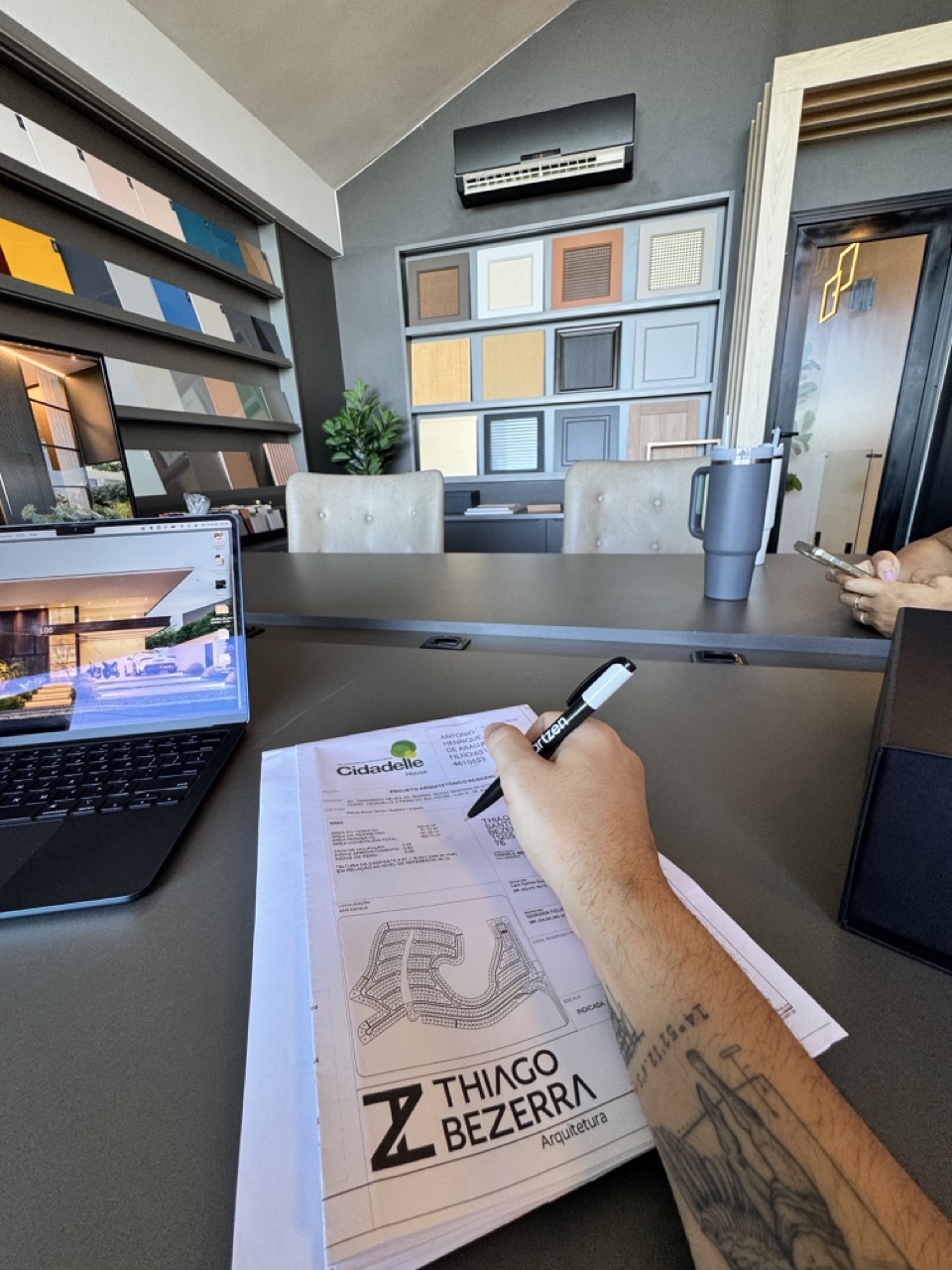
Before closing, a proper transaction requires the seller to produce a stack of Clear Certificates (Certidões Negativas). These prove that no pending debt or legal action could later reach the property and take it back from you. Skipping this list is how buyers lose land years after closing.
| Certificate | Issued by | Why it matters |
|---|---|---|
| Updated Matrícula (Certidão de Matrícula atualizada) | Cartório de Registro de Imóveis | Confirms current owner and any liens (ônus) or judicial restrictions |
| Urban Property Tax clearance (IPTU negativo) or Rural Property Tax clearance (ITR negativo) | Prefeitura (city hall) or Federal Revenue Service (Receita Federal) | Property tax debt follows the property, not the seller |
| Civil and criminal clearance (Certidões cíveis e criminais) | State and Federal Courts (Tribunais de Justiça) | Active litigation against seller can void the sale |
| Labor Court clearance (Certidão da Justiça do Trabalho) | TRT / TST | Labor debts can reach personal assets and the property |
| Federal tax clearance (Certidão Receita Federal / PGFN) | Federal tax authority | Federal debt can attach to assets |
| Spouse certificates (Certidões do cônjuge) | Same sources, if seller is married | Marital property rules can drag the spouse into litigation |
| Environmental clearance (Certidão ambiental / INEMA) | INEMA (Bahia state environmental agency) | Confirms no Permanent Preservation Area (APP) violations or fines on the plot |
| Transfer Authorization Certificate (Certidão Autorizativa de Transferência, CAT) | SPU (Federal Heritage Secretariat) | Required if plot is on marinha land. No CAT, no transfer. |
Two to three weeks of work. The cost is small compared to the purchase. Any seller who refuses or rushes you past it is telling you something about the deal.
4. Rural or urban: the question that decides the purchase
Plot classification is set by INCRA (the federal land agency) and the local prefeitura. Pull the Rural Property Registry Certificate (CCIR, Certificado de Cadastro de Imóvel Rural) from INCRA. If there is a CCIR, the plot is rural for federal purposes, regardless of what the realtor called it.
For rural plots, three extra layers apply:
- Georeferencing (Georreferenciamento SIGEF). Rural plots must be surveyed and registered in INCRA’s SIGEF system. Without certified georeferencing, the RGI cannot record a transfer. Frequent deal-breaker on plots not updated in 20 years.
- Rural Property Tax (ITR). Rural plots pay ITR instead of IPTU. Debts must be cleared.
- Law 5.709/71 limits on foreign ownership.
Foreign acquisition limits on rural land (Law 5.709/71)
| Plot size | Requirement |
|---|---|
| Up to 3 MEI (Módulo de Exploração Indefinida) | Free acquisition, subject to normal registration |
| 3 to 20 MEI | Declaration to INCRA |
| 20 to 50 MEI | Approved exploitation project and INCRA authorization |
| Above 50 MEI | Approval of the Brazilian Congress (rarely viable) |
MEI varies by município. On the south coast of Bahia it tends to sit around 20 hectares per MEI. Always confirm with the local INCRA office for that specific plot.
Additional caps: no more than 25% of a município’s territory can be held by foreigners, and no single foreign nationality can exceed 40% of that slice. In small coastal municipalities this cap matters.
If you are a foreigner not resident in Brazil, acquisition of rural land as pessoa física is essentially blocked with narrow exceptions. And a Brazilian company under foreign control is treated as foreign for this law, so the CNPJ route (section 9) does not unlock rural land.
5. Coastal land: SPU, marinha, APP and the RIP
Bahia has over 900 km of coastline, and a significant portion of the beachfront sits on Marine Lands (Terrenos de Marinha), federal property managed by the Federal Heritage Secretariat (SPU, Secretaria do Patrimônio da União).
The marinha strip is 33 meters measured inland from the 1831 average high tide line, plus a variable band of Accrued Lands (Terrenos Acrescidos) added by natural or artificial accretion.
On marinha land you do not buy full ownership of that portion. You buy one of two regimes:
| Regime | What you hold | Annual fee | On transfer |
|---|---|---|---|
| Leasehold (Aforamento) | Useful Domain (Domínio Útil), a perpetual leasehold. Union keeps the Direct Domain (Domínio Direto). | Ground Rent (Foro): 0.6% of land value | Transfer Fee (Laudêmio): 5% of plot and improvements |
| Occupation (Ocupação) | Right to occupy | Occupation Fee (Taxa de Ocupação): variable rate | Laudêmio: 5% of plot and improvements |
The Matrícula will reference the SPU Registry Number (RIP, Registro Imobiliário Patrimonial) that identifies the plot in SPU’s system. Before closing, pull a Transfer Authorization Certificate (CAT) from SPU confirming Foro or Ocupação is paid and authorizing the transfer. No CAT, no transfer.
A few realities of marinha on the Bahia coast:
- Not every beachfront plot is marinha. Pull the Matrícula and check for the RIP.
- If the plot is marinha and the seller is behind on Foro or occupation fees, the CAT will not be issued. These debts can sit at tens of thousands of reais.
- There is ongoing legislative discussion about transferring marinha to states, municipalities or occupants. None of that is in force as of April 2026. Assume current rules apply.
APP and INEMA
Separate from marinha, the plot can sit inside a Permanent Preservation Area (APP, Área de Preservação Permanente) under the Brazilian Forest Code. Mangroves (manguezais), restingas, dune vegetation, the first 30 meters from any watercourse, springs and steep slopes are APP by law. You cannot build on APP. Period. INEMA enforces this at state level in Bahia. Walk the plot with a local architect or environmental engineer, cross check against satellite imagery and the official coastal and hydrographic layers. If half the plot is APP, half the plot is not buildable.
6. The municipal layer: zoning and Building Feasibility
Federal and state rules tell you if you can own the plot. Municipal rules tell you what you can build on it. Each prefeitura on the Bahia coast has its own Master Plan (Plano Diretor) and Building Code (Código de Obras) setting maximum built area, height, setbacks, permeable soil ratio, access requirements and zoning category.
| Municipality or protected area | Notable restrictions |
|---|---|
| Ilhéus | Plano Diretor with specific zoning for beach districts (north and south) |
| Itacaré and Serra Grande | Environmental Protection Area (APA) Itacaré-Serra Grande, strict environmental overlay |
| Maraú (Peninsula: Barra Grande, Algodões, Taipu) | APA Baía de Camamu, heavily restricted tourism and residential zoning |
| Una | Ecological Station (ESEC) and Biological Reserve (REBIO) overlays, parts of the coast essentially unbuildable |
| Porto Seguro and Trancoso | Costa do Descobrimento heritage area, historic district restrictions |
Before closing, ask for a written Building Feasibility Consultation (Consulta de Viabilidade) or Land Use Certificate (Certidão de Uso do Solo) issued by the prefeitura for that specific plot. It states on paper what you can build. If the prefeitura refuses to issue it, learn that before you own the land.
Red flag: a seller who says “of course you can build, everyone builds here” but cannot produce a written viabilidade.
7. Closing: how the transfer actually happens
Closing in Brazil is a two-step process at two different offices, not one.
- Sign the Public Deed of Purchase and Sale (Escritura Pública de Compra e Venda) at a Notary (Cartório de Notas). The notary reads the deed aloud and confirms identity and capacity of both parties.
- Register at the RGI. Take the Escritura to the Cartório de Registro de Imóveis where the Matrícula lives and pay the Property Transfer Tax (ITBI, Imposto de Transmissão de Bens Imóveis), typically 2 to 3% of the transaction value in Bahia, rate varies by município. Only after this registration do you legally own the property.
Foreign buyers who sign an Escritura and leave the country without registering are still not owners. Any mortgage or judicial attachment against the seller that comes in between signing and registration takes priority over the buyer. Register within days.
If you cannot be in Brazil, grant a Specific Power of Attorney (Procuração Pública com Poderes Específicos), notarized in Brazil or with apostille from your home country, to a trusted professional who can complete the registration for you. Standard practice for foreign clients.
8. Moving the money into Brazil: BACEN and the Exchange Contract
This is where foreign buyers lose the most value, not at the closing table but months or years later when they try to sell and take the money home. Brazilian law does not forbid foreigners from bringing cash, but it does require every cent to flow through a specific paper trail. Without that trail, repatriation is limited or blocked.
What must happen
- Every wire from abroad must enter through a Brazilian bank authorized to operate in foreign exchange (autorizado a operar em câmbio) by the Central Bank (BACEN, Banco Central do Brasil).
- For each wire, the bank issues an Exchange Contract (Contrato de Câmbio) identifying the purpose. For a property purchase the correct code is real estate acquisition (aquisição de imóvel). Keep every Contrato de Câmbio forever. These are the receipts that prove the money came in legally.
- The foreign capital must be registered at BACEN through the Foreign Direct Investment Electronic Registry (RDE-IED, Registro Declaratório Eletrônico de Investimento Externo Direto) within 30 days of funds arrival. The registry logs the Contrato de Câmbio number, the purpose, and the investor’s identification.
- When you eventually sell the property, the proceeds convert and leave Brazil up to the registered amount, plus documented capital gains. Without the original registration, the outflow is capped or refused.
| Stage | Document | Authority |
|---|---|---|
| Incoming wire | Contrato de Câmbio (purpose: aquisição de imóvel) | Authorized Brazilian bank |
| Capital registration | RDE-IED registration | BACEN (within 30 days) |
| Future dividend or income remittance | Outgoing Contrato de Câmbio linked to RDE-IED | Authorized Brazilian bank |
| Sale proceeds repatriation | Outgoing Contrato de Câmbio, capped at registered capital + documented gains | Authorized Brazilian bank under BACEN rules |
Practical rules
- Do not pay the seller in cash, do not transfer to the seller’s personal account abroad, do not use informal exchange houses (casas de câmbio não autorizadas). These create an unregistered chain that will freeze future repatriation.
- The Tax on Financial Operations (IOF, Imposto sobre Operações Financeiras) applies to exchange operations. Rates vary by purpose and year. Your bank quotes the effective rate at the time of the wire.
- Ask your bank for the Contrato de Câmbio document in both Portuguese and English for your records.
- Rental income generated inside Brazil can be remitted abroad, but the tax residency and the withholding rules differ from capital repatriation. This is where most buyers need an accountant, not a realtor.
9. Buying in your name (CPF) vs through a company (CNPJ)
Most foreign buyers of a single family beach home buy directly in their own name with a CPF. It is simpler, cheaper, and sufficient. Some buyers are better served by forming a Brazilian Limited Liability Company (Sociedade Limitada, Ltda) with its own Corporate Tax ID (CNPJ, Cadastro Nacional da Pessoa Jurídica) that owns the property instead.
| Aspect | Direct ownership (CPF) | Brazilian company (Ltda, CNPJ) |
|---|---|---|
| Setup cost | Only the CPF application | Lawyer and accountant setup, roughly R$3,000 to R$8,000 |
| Ongoing cost | Annual personal tax filing | Monthly accounting fees, roughly R$500 to R$1,500 |
| Short-term rental income tax | Progressive personal rates up to 27.5% | Under Presumed Profit (Lucro Presumido), effective rate commonly 11% to 14% |
| Capital gains on sale | 15% to 22.5%, progressive bands | 15% to 25%, depending on regime |
| Liability protection | Personal assets exposed to property-related claims | Corporate veil limits liability to company assets |
| Multiple properties / succession | Each transfer pays full ITBI and inventário | Shares (quotas) transfer independently of each property |
| Rural land | Foreigner resident in Brazil, within Law 5.709/71 limits | Foreign-controlled company treated as foreign. Same restrictions apply. |
| Local representative | Not required | Required: a Brazilian resident administrator (administrador residente) |
When the CNPJ route makes sense
- You plan to operate the home as a short-term rental (Airbnb, pousada). The tax math often works in favor of the company structure once net rental exceeds a modest threshold.
- You plan to buy more than one property in Brazil.
- You want to simplify succession for heirs who are not Brazilian residents. Transferring company quotas is cleaner than a Brazilian probate (inventário).
- You want the liability protection for operational risks (tenants, guests, construction defects).
When direct ownership (CPF) is better
- Single family home for personal use, no rental plans.
- You want minimal ongoing paperwork and no monthly accounting fees.
- You are a resident in Brazil and planning to apply the residential capital gains exemption in the future.
Either way, the BACEN registration in section 8 applies. For direct ownership the registration is linked to the individual. For a CNPJ, the foreign capital is registered as investment in the Brazilian company (RDE-IED) and the company uses those funds to buy the property.
10. When to walk away
I’ve seen this movie too many times: clients coming to me with a ‘signed deal’ only to discover they bought land from someone who wasn’t the legal owner or was hiding massive inherited debts. They skipped the due diligence and lost their capital before I could even start the project. I don’t let my clients take these risks. That is why I maintain close partnerships with specialized real estate law firms. We vet every document and bridge the gap between the sales pitch and the legal reality. My job is to ensure your investment is bulletproof before I even touch my sketchbook.
| Red flag | What it usually means |
|---|---|
| No updated Matrícula, seller insists on selling by Posse or Contrato de Gaveta | No legal ownership to transfer |
| Price dramatically below market for a “beachfront” or “Trancoso view” plot | Paperwork issue, unbuildable plot, or unresolved heirs |
| Seller refuses or delays Certidões Negativas, IPTU or ITR clearance | Likely active debt that will follow the property |
| Prefeitura refuses to issue a written Consulta de Viabilidade | Zoning or environmental restriction on the plot |
| Plot is rural and seller pushes you to close before INCRA verification | Law 5.709/71 limit violation waiting to happen |
| Plot touches the beach and seller cannot show SPU status or CAT | Unpaid marinha debts or undocumented occupation |
| Seller requests payment in cash, informal exchange, or to a personal account abroad | No Contrato de Câmbio, no BACEN registration, no future repatriation |
| Same plot listed by multiple sellers with different names | Ownership dispute, heirs, or outright scam |
Any one of these on its own is reason to stop. Two or more, walk away.
What happens next
A proper due diligence on a Bahia coastal plot takes four to eight weeks. Less if the plot is regularized and the seller cooperative. More if there is georeferencing to redo, heirs to include, or marinha debts to clear.
A plot that comes through this process clean is a plot you can build on, live on, pass to your children, or resell years from now with no surprises. That is the whole point.
If you want a specific plot reviewed before you sign anything, I run a preliminary analysis covering Matrícula, zoning, SPU status and environmental classification. Contact details below.
Next step, if your plot checks out: how to actually build a luxury home in Bahia as a foreign owner.
Frequently Asked Questions
Can foreigners legally buy land in Brazil?
Yes. Urban land is open to foreigners under the same general rules as Brazilian citizens. Rural land is restricted by Law 5.709/71 with specific size limits, and in most cases the buyer must be resident in Brazil to acquire it as a natural person.
What is a Matrícula and why does it matter?
The Matrícula is the property record at the Cartório de Registro de Imóveis. It is the only document that proves current ownership in Brazil. The Escritura records a past transaction but does not prove today’s ownership. Always request an updated Certidão de Matrícula less than 30 days old.
What is a terreno de marinha and what does it cost?
A 33 meter strip of federal land measured from the 1831 high tide line, managed by SPU. On transfer, a 5% Laudêmio applies. Under Aforamento there is also a yearly Foro of 0.6% of the land value. Under Ocupação regime there is a variable Taxa de Ocupação.
How do I legally transfer money to Brazil to buy property?
Through a bank authorized by BACEN and a formal Contrato de Câmbio coded for aquisição de imóvel. The foreign capital must be registered at BACEN through RDE-IED within 30 days. Without this, repatriating future sale proceeds is blocked or limited.
Should I buy in my name (CPF) or through a Brazilian company (CNPJ)?
Direct ownership via CPF is simpler and cheaper for a single family home. A Sociedade Limitada (Ltda) with CNPJ makes sense when holding multiple properties, running short-term rentals, or planning succession. For rural land, a Brazilian company under foreign control is treated as foreign for Law 5.709/71 purposes.
How long does due diligence take when buying land in Bahia?
Four to eight weeks is typical. Shorter if the plot is already regularized. Longer if there is georeferencing to redo, heirs to include, or SPU debts to clear.
Do I need to be in Brazil to close on a property?
No. Foreign buyers commonly close through a Procuração Pública com Poderes Específicos, notarized in Brazil or apostilled in the buyer’s home country, granted to a trusted professional.

